

What Is Windows Operating System
side by side → ← prev
What is Windows?
Windows is a graphical operating system developed by Microsoft. It allows users to view and store files, run the software, play games, sentinel videos, and provides a way to connect to the internet. It was released for both home calculating and professional person works.
Microsoft introduced the first version equally 1.0
It was released for both home computing and professional functions of Windows on 10 November 1983. After, information technology was released on many versions of Windows besides every bit the electric current version, Windows 10.
In 1993, the first business-oriented version of Windows was released, which is known every bit Windows NT 3.1. Then it introduced the next versions, Windows three.5, 4/0, and Windows 2000. When the XP Windows was released by Microsoft in 2001, the visitor designed its various versions for a personal and business concern surroundings. It was designed based on standard x86 hardware, like Intel and AMD processor. Accordingly, it can run on different brands of hardware, such as HP, Dell, and Sony computers, including habitation-built PCs.
Editions of Windows
Microsoft has produced several editions of Windows, starting with Windows XP. These versions take the same cadre operating system, but some versions included advance features with an additional cost. There are two almost common editions of Windows:
- Windows Domicile
- Windows Professional person
Windows Abode
Windows Dwelling house is bones edition of Windows. It offers all the fundamental functions of Windows, such as browsing the web, connecting to the Net, playing video games, using part software, watching videos. Furthermore, it is less expensive and comes pre-installed with many new computers.
Windows Professional
Windows Professional is also known as Window Pro or win Pro. It is an enhanced edition of Windows, which is beneficial for ability users and modest to medium-size businesses. Information technology contains all features of Windows Home likewise equally the post-obit:
- Remote Desktop: Windows Professional person editions allow users to create a remote desktop connection. Information technology provides users the option to connect with some other figurer remotely, including share the control of its mouse, keyboard, and view display. It is mainly accessed with the help of port 3389. Additionally, we can also use the TeamViewer or VNC awarding to create a remote desktop connectedness.
- Trusted Kicking: It provides security as encrypting to the boot loader and protects the calculator from rootkits (Collection of software tools that allow users to enter another computer through an unauthorized way known as rootkits).
- Bitlocker: It allows users to encrypt a storage drive past using AES (Advanced Encryption Standard) algorithm. This feature is nowadays in Windows vii, and Windows Vista (Merely ultimate and Enterprise versions), including Windows Server 2008.
Business laptops or computers mainly use the Bitlocker characteristic to protect their data on the computer. As if your computer has been stolen, information technology is very difficult to break the Bitlocker countersign. It can be unlocked by inbound the correct password merely. Furthermore, if you forget your Bitlocker password, information technology cannot be retrieved.
- Windows Sandbox: A sandbox is located on a figurer, network, or an online service enables users to experiment or exam reckoner security without interrupting the organisation.
- Hyper-V: Information technology stands for a hypervisor, and developed by Microsoft Corporation on 26 June 2008. It is also called Windows Server Virtualization. Hyper-V is used for virtualization of x86-64 servers, running virtual machines and 3rd party software like VirtualBox.
- Group policy management: An admin can specify group policies in an organization to manage different Windows users.
- It provides back up for the systems that have more than 128 GB of RAM.
- Furthermore, it also offers more Windows update installation options too as flexible scheduling and postponement around 34 days.
Why is Microsoft Windows called Windows?
When Microsoft Windows was non introduced, all of the Microsoft users were used MS-DOS operating arrangement. Microsoft gave one give-and-take to most of its products; information technology required a new Discussion that tin correspond its new GUI operating arrangement. Microsoft decided to call it Windows considering information technology has the power to perform several tasks and run applications simultaneously.
Another reason behind calling information technology Windows was that you could not trademark a common name similar Windows. Its official proper noun was Microsoft Windows, the first version i.0 of Windows was introduced in 1995.
History of Microsoft Windows
Since 1983, Microsoft is producing Windows. The founder of Microsoft 'Bill Gates' appear for Microsoft Windows on 10 November 1983 and released the first version of Windows in 1985. The following table contains history of Windows from edition 1 to 10.
| Version | History |
|---|---|
| Windows one.0 | Microsoft introduced Windows with its commencement version 1.0. It was released on twenty November 1985, and at the showtime, it was sold for $100.00. Additionally, it was the showtime effort by Microsoft to produce a graphical user interface in xvi-bit. |
| Windows ii.0 | The second version, Windows 2.0, was produced by Microsoft on 9 December 1987 too as it as well introduced the Window 386 on the same mean solar day. Initially, the price was the aforementioned $100.00 for both of the Windows in the marketplace. It came with new features such as it was able to overlap each other, and it also introduced the new style to maximize and minimize the window, instead of using 'zooming' and 'iconizing' respectively. Furthermore, it too included the control console feature where several organisation settings and configuration options are available in i identify. Fifty-fifty Microsoft Word and Excel were besides used for the kickoff time on Windows 2. |
| Windows 286 | Information technology was released in June 1988, and at the get-go, its price was $100.00. |
| Windows three.0 | Information technology was the first Windows that needed a hard bulldoze. It was launched by Microsoft on 22 May 1990. Its full version was sold for $149.95, and the updated version was $79.95. Additionally, the multimedia supported Windows three was introduced in October 1991. Windows version 3.0 gained more than success, and it became a claiming for Apple's Macintosh and the Commodore Amiga GUI as it was provided pre-installed on computers past PC compatible manufacturers as well as Zenith Data Systems. Information technology was too able to run the MS-DOS plan in Windows that allowed multitasking in legacy programs besides as supported 256 colors, which made the interface more colorful and advanced. |
| Windows 3.one | Information technology was launched in April 1992, when it was in development its lawmaking name was Sparta. It was the commonly used operating arrangement for the PC graphical user interface. In the commencement two months afterwards its release, more than than one million copies were sold. It made the Windows usable publishing platform for the first time past introducing the TrueType fonts. Minesweeper was also used for the first time on the Windows 3.1. It was needed but 1MB of RAM to run, and information technology allowed users to control the MS-DOS programs with the assist of a mouse for the start time. Furthermore, it was also the first operating organisation to be distributed on a CD-ROM. Some other generations of version three.i are as follows:
|
| Windows 95 | As the name specifies, Windows 95 was launched on 24 August 1995, and inside four days of its release, more than i 1000000 copies were sold. It introduced the Start button and Start carte features for the first time, including important features such as a 32-flake environs, multitasking, and taskbar. Furthermore, MS-DOS still played a vital role in Windows 95, with the aid of some programs and elements. Net Explorer was too used on the Windows 95 for the first fourth dimension, but it could not exist installed by default, it needed the Windows 95 plus pack for it. Later, Windows 95 improved and included the IE browser by default. |
| Windows 95 Service Pack | It was introduced on 24 February 1996. |
| Windows NT 4.0 | On 29 July 1996, Windows NT 4.0 was launched. |
| Windows CE |
|
| Windows 98 | Information technology was developed on Windows 95, and introduced in June 1998. It was released, including Internet Explorer four, Windows Accost Book, Outlook Express, Microsoft Conversation, and NetShow Player. The second version of Windows 98 was introduced on 5 May 1999, in this version the NetShow Player was replaced by Windows Media Actor 6.2. Information technology was as well brought with the address bar and back/forward navigation buttons in Windows Explorer, and more than other features. Windows 98 came with the new feature Windows Commuter model for figurer components and accessories, which offered support to all future editions of Windows. Furthermore, it was improved USB support including USB mice and USB hubs. |
| Windows 2000 | On 17 February 2000, it was launched. |
| Windows ME | It was invented in September 2000, and it was the last operating system, which was based on MS-DOS and in the Windows 9x line. According to the enterprise market, it was considered consumer-aimed Windows with the Windows 2000. Information technology was likewise provided some useful features for consumers likewise every bit more automatic system recovery tools. Additionally, an Internet Explorer, Windows Movie Maker, and Windows Media Actor seven were used on Windows ME for the get-go time. |
| Windows 2000 | Information technology was introduced on 17 February 2000. Basically, it was based on Microsoft business-oriented organisation Windows NT, and later on it provided the base for the Windows XP. Furthermore, the automatic updating characteristic made their appearance for the showtime fourth dimension on Windows 2000, and it was the start operating organization to support hibernation. |
| Windows XP | Windows XP was considered the best edition of Windows; it was introduced on 25 Oct 2001. It followed Windows ME and provided consumer-friendly elements. The 64-scrap version of Windows XP was introduced on 28 March 2003. Furthermore, Its Professional x64 version was introduced on 24 April 2005. The start push button and taskbar were replaced by including the light-green Start button, blueish task bar, and vista wallpaper, likewise as several shadows and more visual effects. Information technology also brought some important features, such as ClearType, which helps to read content on LCD screens, autoplay from CDs and other media, unlike automated update, and recovery tools. Additionally, It was used for the longest time, and even when it was discontinued, information technology was used at an estimated 430 chiliad PC. |
| Windows Vista | It was introduced by Microsoft In January 2007. Information technology was brought the better look and feel user interface and included transparent elements, security, and search. When it was in the evolution phase, its code name was "Longhorn." Windows Media Actor 11 and Net Explorer 7 were made their appearance for the outset fourth dimension on Windows Vista, included Windows Defender, an anti-spyware plan. It was also provided some useful features such as Windows DVD Maker, speech recognition, and Photo Gallery. Furthermore, information technology was the first operating arrangement to be distributed on DVD. |
| Windows Server 2008 | On 27 February 2008, Microsoft introduced Windows Server 2008. |
| Windows 7 | It was introduced on 22 October 2009 to overcome all problems that were faced past Windows Vista. It was released with convenient features and less dialogue box overload. It was more stable, faster, and easy to apply as compared to release other previous versions. Additionally, the handwriting recognition feature was used for the first fourth dimension on Windows 7. As IE was the default browser in Microsoft Windows, the antitrust investigations used Microsoft in Europe for making information technology a default browser. Consequently, information technology had to provide the users the option to choose and install the browser on the beginning kick. |
| Windows Server 2012 | On 4 September 2012, Microsoft was released Windows Server 2012. |
| Windows 8 | Information technology was introduced by Microsoft on 26 October 2012. It was released with new features, such as a fast operating system, support for the USB 3.0 devices, and Web shop. The Web shop is a place where you can download dissimilar types of Windows applications; its total-screen way was run for the showtime time on Windows viii. |
| Windows 8.1 | It was launched by Microsoft on 17 October 2013. It was re-launched the Start push button, which was able to brandish the Start screen from the desktop view of Windows viii.1. Furthermore, information technology provided a way to select boot direct into the desktop. |
| Windows 10 | On 29 July 2015, Microsoft introduced Windows 10. It was released with some new features such as switching between a keyboard and mouse manner and a tablet mode, which was benign for the users who utilize computers like surface Pro 3 with a detachable keyboard. Information technology was designed for all Windows platforms across several devices, equally well as Windows tablets and Phones, including common applications. |
Features of Windows
Microsoft Windows includes a lot of features to help users. Some of its fantabulous features are as follows:
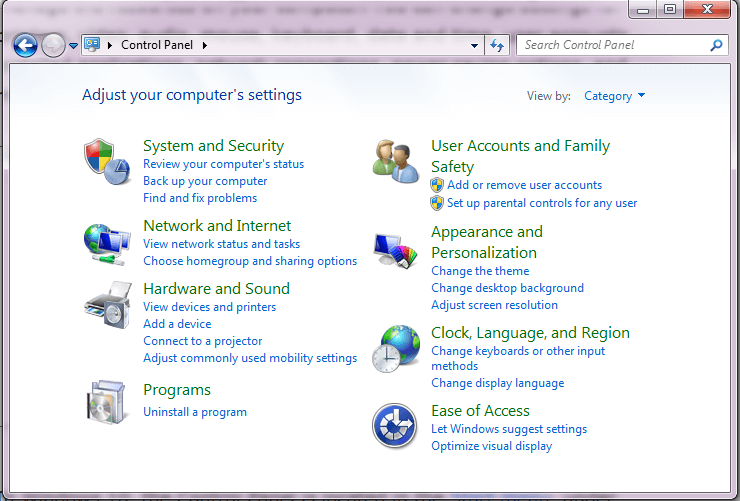
- Command Panel: Windows provides a Control Panel feature that includes many tools to configure and manage the resource on their computer. For instance, users can change settings for audio, video, printers, mouse, keyboard, network connections, date and time, ability saving options, user accounts, installed applications, etc.
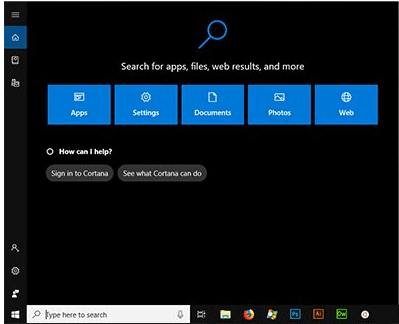
- Cortana: Windows 10 introduced a feature named Cortana, which is able to have voice commands. Information technology tin perform various tasks such as it can answers your questions, search data on your computer, online purchases, prepare reminders, and appointments, etc. Furthermore, it acts like other voice-activated services such as Google Assistant, Alexa, or Siri, including ane more than benefit of searching the data on your computer. To open the Cortana in Windows 10, press Window primal + Southward.
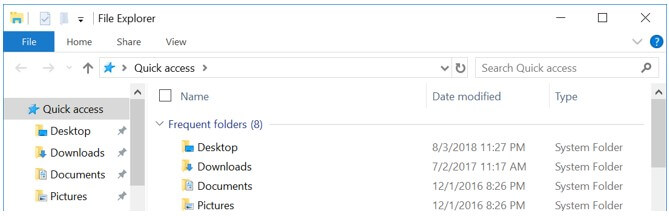
- File Explorer: It is also known as Windows Explorer, which displays your files and folders on the figurer. It allows users to scan the data on the difficult drive, SSD and other inserted removable disks like pen drives and CDs, and y'all can manage the content according to the requirements such as delete, rename, search, and transfer the data.
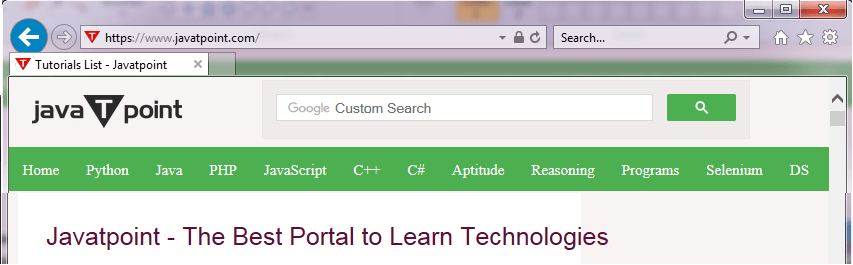
- Internet browser: As the cyberspace browser is very important to search for anything, view pages, online shopping, play games, watch videos, etc. Windows come up with a pre-installed cyberspace browser. in Windows 10, the Border cyberspace browser is the default browser. Furthermore, Cyberspace Explorer was the default browser in Microsoft Windows from the Windows edition 95 to eight.1 version.
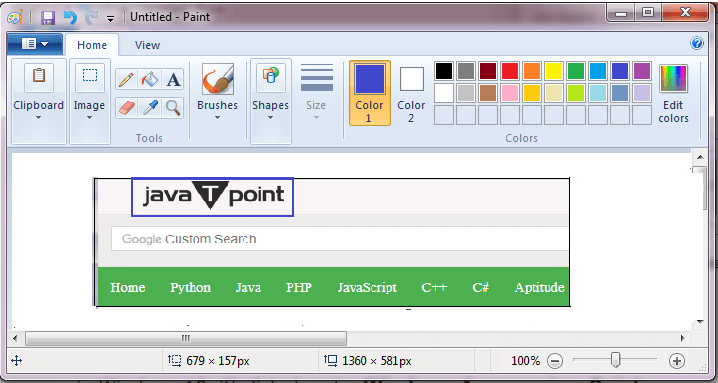
- Microsoft Pigment: Since November 1985, Microsoft Windows comes with pre-installed Microsoft Pigment. It is a simple software to create, view, and edit an image. Information technology offers several tools to describe an prototype, crop, resize, and salve an image with a different file extension.
- Taskbar: Windows comes with a taskbar that displays currently opened programs, information technology likewise allows users to access any specific programs. Additionally, it includes the notification expanse on the correct side that shows date and time, battery, network, volume, and other background running applications.

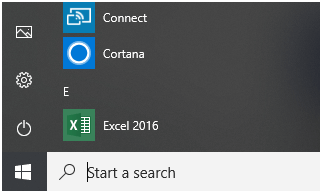
- Start menu: Microsoft Windows contains a start menu to the left side of the taskbar. Information technology displays programs and utilities that are installed on the computer. It can be only opened by clicking on the Start carte du jour push or pressing the commencement key on the keyboard.
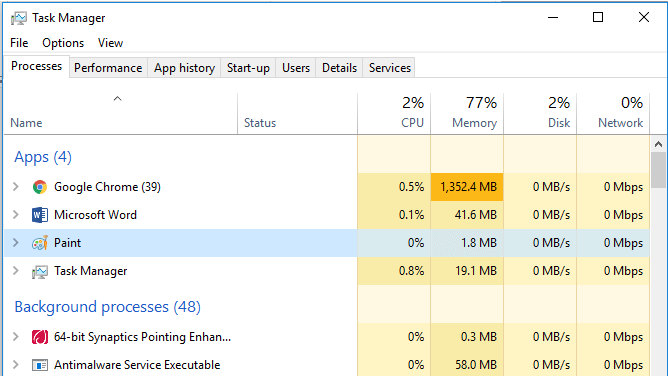
- Job Manager: Windows includes the job manager characteristic that provides detail of the running applications or programs on the computer. You can also check how much of the system resource, such as RAM, CPU, disk I/O, are existence used by each of the applications.
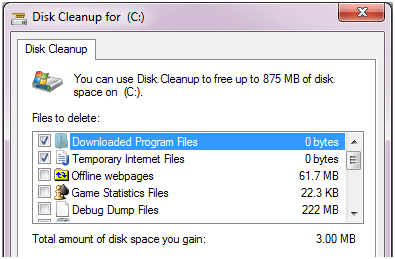
- Deejay Cleanup: It is used to free upward disk space with the help of deleting temporary or unnecessary files. Information technology also helps to heighten the performance of the computer, and boost storage space to download the programs and documents. To open Deejay Cleanup, follow the below steps:
- Open up the File Explorer by pressing Window + Eastward.
- Then, right-click on any deejay drive and select Properties option from the drop-down list.
- Now, click on the Disk Cleanup.
Departure between Linux and Windows Os
Below is a table to draw the major factors nigh Linux and Windows operating systems:
| Topic | Windows | Linux |
|---|---|---|
| Command Line | Windows allows users to use the command line, but not as a Linux command line. To open up the command line, click on the Run dialog box and type CMD in the run search bar and printing Enter key. | Although the Linux command-line offers more features for assistants and daily tasks, it does not offering much to finish-users. |
| Reliability | Windows has improved its reliability in the past few years, simply still it is less reliable every bit compared to Linux. | Linux is more than reliable and secure then Windows Bone. It mainly focuses on organisation security, procedure management, and up-time. |
| Usability | Windows is easier to use every bit information technology provides a simple user interface. Merely its installation process can take more than fourth dimension. | Although Linux has the ability to perform complex tasks easier, its installation process is complicated. |
| Security | Microsoft has enhanced the security features in Windows over contempo years. As it has a huge user base, mostly for new calculator users, it can exist easily targeted for malicious coders. Furthermore, among all of the operating systems, Microsoft Windows can be part of developing malware and viruses. | Linux is a more secure operating organisation as compared to Microsoft Windows. Even attackers found difficulty in breaking the security with the aid of Linux. |
| Support | It provides users the online and integrated assistance systems, every bit well as a large number of informative books, are available to provide aid for people at all skill levels. | A wide number of books are available to offer help nearly Linux, including online support. |
| Updates | Regular Windows update makes users frustrated past alerting the Windows update for inconvenient times. Additionally, information technology takes more time to get an update. | Linux provides users total control over updates. They can update it accordingly, and it takes less time to get an update as well equally without any reboot the arrangement. |
| Licensing | Microsoft Windows with license does not allow to change the software (don't take access to the source code). It can exist installed just on the systems with a Windows license key. | Linux operating organization with a license offers users the benefit to re-use the source code on any number of systems. It is also allowed the users to change the software and sell its modified version. |
Next Topic Computer Fundamentals Tutorial
← prev next →

What Is Windows Operating System,
Source: https://www.javatpoint.com/windows
Posted by: wileyforsen.blogspot.com
0 Response to "What Is Windows Operating System"
Post a Comment