

How Does A Home Owner Clean Up Oil Tank Leaks In House The Basement
Residential Home Heating Oil Tanks
Homeowners | Contractors
Information for Homeowners:
-
In 2022, 45% of Connecticut households used fuel oil or other petroleum products as the master free energy source for home heating.
-
Residential home heating oil tanks can be found:
-
in a home's basement,
-
outside, above ground most the firm or
-
buried in close proximity to the firm.
-
-
Homeowners should exist proactive, educate themselves on dwelling house heating oil tank safety, and piece of work with their licensed service provider to prevent oil leaks and spills.
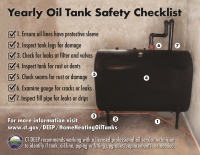
Home Heating Oil Tank Maintenance
DEEP recommends that homeowners play an active role in ensuring that their oil organisation is maintained properly on a yearly basis and gives homeowners helpful tips to help evaluate the heath of their oil system.
Video: Prevent Abode Heating Oil Leaks and Spills
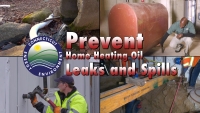 Video to educate homeowners, landlords and local officials on the hazards of having an unprotected oil line installed underground or inside concrete basement floors.
Guidance for Residential Hush-hush Home Heating Oil Tank Leaks
Data on what to do if you have an oil spill or oil contagion from a heating equipment failure, an oil commitment over-make full, and/or oil-contaminated storm waters.
Fuel for Thought
The Connecticut Council on Environmental Quality's December 2022 report on the extent of adventitious releases (spills and leaks) of home heating oil in Connecticut and recommendations to reduce the incidence and severity of accidental releases.
Appendix A of the report includes financing assistance programs in that are available for homeowners wishing to upgrade or replace their heating fuel systems and oil tanks.
Oft Asked Questions about Residential Abode Heating Oil Tanks
Answers to your questions almost underground storage tanks and additional resources that yous may find helpful.
Insurance Data
The Connecticut Department of Insurance requires that homeowner's policies include liability coverage and funds for the make clean-upward of a fuel oil release, though exceptions may be. Homeowners should consult with their insurance agent to make up one's mind if the release is covered under their policy.
If the release is the mistake of a heating oil dealer, homeowners should consult with their dealer. The Country requires heating oil dealers to have full general liability insurance coverage and insurance to encompass whatever potential environmental damage due to heating oil spills. When a release of any petroleum or chemical occurs to the ground, this ways that a release has occurred to the waters of the state. Water is a public trust. Thus discharges to soil or h2o effect in third party damage because the waters of the state have been damaged by the release to the ground.
The property owner or the entity that acquired any condition which reasonably can be expected to create a source of pollution to the waters of the land is responsible for cleaning upwardly the release and restoring the soil and h2o.
Section of Insurance Contact Data
- Online portal: to file a complaint or enquire a question Website: https://portal.ct.gov/cid.
- On the dwelling folio, look for "Complaints and Questions".
- Call the Consumer Services Sectionalization at: 1 (800) 203-3447 or (860) 297-3900.
- E-mail the Department of Insurance at: insurance@ct.gov.
Emergency Response and Spill Prevention
DEEP contact data for situations in which in that location is an immediate threat to public prophylactic, wellness or the environment.
Information to help guide contractors who are installing, maintaining and/or servicing underground storage tanks that serve five or more residential units.
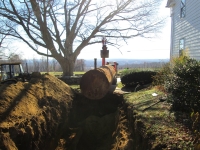
Guidance for Contractors that Remove Residential Tanks
Pursuant to CGS Sec. 20-420, in order to remove or replace Residential Underground Heating Oil Storage Tank Systems, certain training, approved by DEEP, must be completed. Details for contractors tin exist found on the Connecticut Department of Consumer Protection's (DCP) web page at: https://portal.ct.gov/dcp/Trade-Practices-Division/Removal-Requirements-for-Secret-Storage-Tanks.
Such approved training includes both of the post-obit courses:
- Occupational Prophylactic & Heath Assistants'due south (OSHA's) 40-Hour Hazardous Waste Operations Emergency Response (HAZWOPER) Training per 29 CFR 1910.120, and subsequent almanac 8-hr refresher preparation; and
- International Codes Council's (ICC'southward) UST Tank Decommissioning U2 Training.
Emergency Response and Spill Prevention
Information on what to do if you have a spill or oil contamination from heating equipment failure, an oil delivery over-fill, and/or oil-contaminated storms waters. There are specific reporting requirements that have to be adhered to.
Emergency Response and Spill Prevention Contacts
DEEP contact information for situations in which there is an immediate threat to public safety, wellness or the environment.
Educational Resources for Contractors that Piece of work with Homeowners:
Video: Prevent Dwelling Heating Oil Leaks and Spills
Educates homeowners, landlords and local officials on the hazards of having an unprotected oil line installed underground or inside physical basement floors.
Heating Oil Contamination and Your Home
This fact sheet from the Connecticut Section of Wellness (DPH) provides an overview of how to detect, control and report oil spills within your domicile.
Content last updated October2021

Source: https://portal.ct.gov/DEEP/Emergency-Response-and-Spill-Prevention/Residential-Tanks/Residential-Home-Heating-Oil-Tanks
Posted by: wileyforsen.blogspot.com
0 Response to "How Does A Home Owner Clean Up Oil Tank Leaks In House The Basement"
Post a Comment